
Key Takeaways
Automating your agency is not just about adopting tools, but about building durable systems designed to scale service delivery. These five points summarize the path to operational efficiency:
- Audit your existing processes before attempting to automate them.
- Select a stack that prioritizes interoperability over feature quantity.
- Define clear triggers for onboarding to reduce manual overhead.
- Centralize data flows to maintain transparency across all client projects.
- Audit automation project ROI regularly to ensure your workflows keep providing value.
Audit and identify high-leverage workflows
Efficiency begins by looking at your current daily grind with an objective lens. Many agencies struggle because they treat automation as a quick fix for messy processes, but you cannot successfully automate agency operations if you have not first understood what needs to happen to reach a successful result.
Mapping client onboarding touchpoints
Start by visualizing every interaction from the moment a contract is signed to the first project deliverable. Documenting these steps helps identify where information is currently getting stuck or where your team is copying and pasting data between systems, a common issue for many systems & automation experts trying to clean up messy stacks. Visualizing this flow makes it easy to spot the gaps where a client feels neglected instead of supported.
Pinpointing repetitive manual data entry tasks
Focus on the tasks that drain your team’s energy without adding actual client value. Things like moving data from a CRM configuration into a project tracker or manually firing off emails are prime candidates for removal. We often find that senior staff are spending hours every week on work that does not require human judgment, which creates a significant drag on billable hours.
Prioritizing process bottlenecks for automation
Not every manual process deserves an automated replacement immediately. You should grade each task based on the time it takes and how frequently it occurs, as well as the risk if it fails. Focus your efforts on high-utility workflows where human error is a recurring cost rather than low-impact administrative tasks that change every week.
| Process Area | Manual Time Cost | Automation Potential | Priority Level |
|---|---|---|---|
| Client Onboarding | 4-6 hours | High | Critical |
| Invoicing/Reporting | 2-3 hours | High | Moderate |
| Project Updates | 1-2 hours | Medium | Low |
This table allows our team to filter out the noise and focus on what truly improves our business operations without over-engineering simple tasks.
Select the right automation stack for your agency
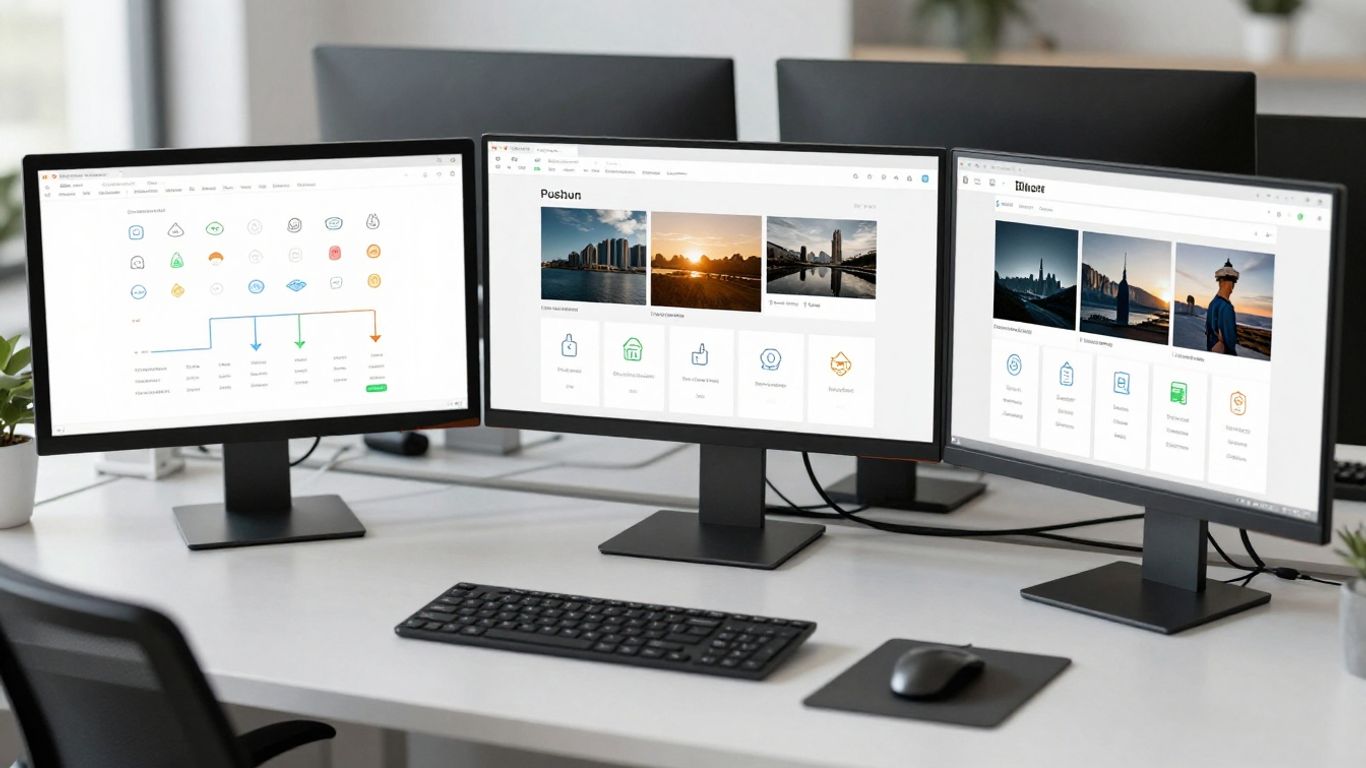
Choosing a tech stack requires discipline, as it is easy to become addicted to adding new software. The best stacks rely on robust connections between your core tools, ensuring that data flows reliably without constant babysitting.
Evaluating CRM and project management integrations
Your tools must talk to one another naturally if you want to avoid silos. We emphasize selecting platforms that support deep Systems Integration through APIs, allowing you to build a single source of truth for all customer information. If your project management tool does not share data with your billing or CRM software, you are essentially asking your team to do the same work twice.
Leveraging no-code platforms like Zapier and Make
No-code tools provide the flexible plumbing required to connect specialized apps without needing a team of dedicated developers. By utilizing platforms like Zapier or Make, you can build logic that triggers actions in one system based on events in another, effectively creating a bespoke operations layer that adapts to your growth. This prevents the need for proprietary, rigid software that eventually becomes a technical debt.
Assessing data security and compliance requirements
Everything you build must respect the privacy and safety of client data. It is important to ensure that any automated workflow includes proper authentication and audit logs so you can trace how data moves. A secure system relies on established Data & Reporting standards that prioritize reliability over speed alone.
Implement automated client onboarding systems
Onboarding is the first real experience a client has with your agency's professional standards. Automating this stage ensures that every new partnership kicks off on time and with full documentation, removing the risk of forgotten files or missing requirements.
Setting triggers for contract signatures and billing
When a contract is signed, the system should trigger an immediate sequence that creates a project folder, sets up the invoice, and adds the client to your internal communications list. By removing manual delays, you present a professional face that values the client’s time and provides them with immediate progress.
Automating kickoff meeting scheduling and resource allocation
Link your shared calendars directly to your onboarding forms to allow clients to choose meeting slots that fit your team's availability. This reduces tedious back-and-forth emails, ensuring that you manage capacity across the agency correctly as soon as the project is booked. Consistency here directly correlates to better team morale and fewer missed deadlines.
Streamlining personalized welcome email sequences
Use your CRM to manage a series of automated but personalized emails that guide the client through the initial process. This helps set expectations for how you work while freeing your team from answering the same predictable questions repeatedly.
- Define clearly what a client needs to provide to start the project.
- Include direct links for logging into your project portal.
- Share contact details for key account members.
- Outline a concise summary of the first week's goals.
These simple automated sequences keep communication professional and consistent from day one without requiring a team member to manually draft every message.
Optimize project management with task automation

Managing project health manually is a recipe for burnout. By tying task creation to your actual team capacity, you gain the ability to predict delivery timelines accurately while keeping clients informed without constant manual reporting.
Automating status updates for client transparency
Clients value knowing exactly where their projects stand without having to chase people down. Use automated status notifications derived from your task management system to send weekly updates, showing them tangible work in progress. This builds trust by showing the work is happening in the background.
Linking task creation to team capacity tools
When tasks are generated, they should be mapped to the actual availability of your staff members as defined in NuggetAI management systems. This prevents the common trap of overcommitting talent and ensures that your agency operates within its realistic bandwidth, rather than the unrealistic expectations of ideal scenarios.
Establishing automated quality assurance workflows for deliverables
Build into your process a final review step that automatically alerts a supervisor when a task is moved to the 'ready for review' stage. By standardizing this step, you remove the guesswork from quality control and ensure that no deliverable is sent to a client without passing through the required internal gates.
Refine financial and reporting operations
Financial clarity is essential for sustainable growth. Without automated systems, agencies often find themselves chasing late payments and manually generating reports that are obsolete by the time they reach a decision-maker.
Automating recurring monthly invoicing and payment reminders
Automating your financial tasks removes the awkwardness of needing to follow up on late payments. A clearly mapped invoice cycle ensures that bills are dispatched instantly upon completion or on a recurring date, improving your agency's cash flow consistency month over month.
Generating real-time KPI dashboards for internal tracking
Stop relying on static spreadsheets that break or require constant maintenance. Deploy live reporting dashboards that pull directly from your production and accounting software to define your key business metrics. This real-time view helps you address profitability risks before they become widespread problems.
Streamlining employee expense tracking and approval cycles
Implement digital expense forms that feed directly into your review pipeline. This reduces the administrative burden on your finance team and provides a clear audit trail for every spend. Consistency in this process ensures that your team stays focused on billable work instead of paper-shuffling.
Build a culture of continuous automation improvement
Automation is never 'done.' It requires a cultural shift toward identifying and documenting manual work so it can eventually be offloaded to a system.
Training agency staff to identify manual task redundancies
Encourage your team to highlight processes that they find frustrating or repetitive. When they understand that NuggetAI focuses on operational flow, they start looking for ways to improve instead of just complaining about the workload. This grassroots approach uncovers the most impactful opportunities for optimization.
Establishing version control for complex automation workflows
As your workflows grow, you need to track changes. Keep a change log for every major automation step, documenting why a trigger was changed or why a conditional logic update was applied. This protects you from accidental breakage when your systems scale beyond basic triggers.
Reviewing the ROI of active automated processes quarterly
Every automation must earn its keep. Evaluate each workflow every quarter to confirm it is still saving time or reducing costs compared to the original manual process. If an automation becomes overly complex or stops providing a return, it is time to simplify it or remove it entirely.
Conclusion
Building sustainable agency growth depends on replacing manual busywork with reliable, automated systems that run independently. When you focus on mapping your operations, choosing the right stack, and fostering a culture of continuous improvement, you create an agency that can scale without the burden of increasing human-intensive administrative tasks. Start small by automating the most repetitive touchpoints, and you will eventually find that your agency is not just operating more smoothly, but also performing at a higher level than competitors still bogged down by legacy manual methods.
Frequently Asked Questions
Is automation right for a small agency with limited resources?
Yes, small agencies often benefit the most because time is your most constrained resource. Automating basic tasks allows you to maintain professional service levels without needing to hire additional administrative staff.
How long does it usually take to see results from automation?
Most agencies notice immediate improvements in operational speed within the first few weeks of implementing basic workflows. Complex integrations may take longer, but the compounding gains in efficiency usually appear within a quarter.
Do I need to be a programmer to build these automated systems?
No, modern no-code platforms are designed to be intuitive for operational staff. You should focus on understanding the logic of your business processes, as that is more critical than writing computer code.
How can I prevent automation from making our customer service feel robotic?
Automation should only handle the data and process steps, not the actual creative work or human problem-solving. Always ensure your systems allow for easy human intervention or override whenever personal interaction is needed.
What should I look for when selecting automation tools?
Look for tools that prioritize interoperability, security, and proven integration capabilities. A tool that connects well with your existing project and financial software is always superior to an all-in-one platform that does many things poorly.
How often should we update our automated workflows?
Review your internal processes during your quarterly planning cycles. As your client services or team structure shifts, your automations will likely need corresponding adjustments to remain relevant and effective.
What are the biggest risks when automating agency operations?
The biggest risk is 'automation silent failure,' where a step breaks without notice. You should always implement monitoring or alerts to ensure that your workflows remain active, accurate, and aligned with your business targets.