
Key Takeaways
Automating your marketing is about creating systems that handle routine tasks so your team can focus on strategy. By standardizing processes, you improve consistency and reduce the drain of manual operations.
- Start by identifying repetitive tasks like data entry or lead follow-ups.
- Use automation to ensure every lead gets a timely, consistent response.
- Choose tools based on your specific business requirements rather than trendy features.
- Regularly audit your workflows to find and fix performance bottlenecks.
- Always measure the impact of your automation against clear business objectives.
The benefits of automating marketing workflows
When we started NuggetAI, we realized that most marketing teams spend half their week fighting their own tools. We built our systems to cut through that noise. The primary goal of any attempt to automate marketing workflows is to stop the slow bleed of time that happens when professional marketers are forced to act as manual data processors.
Saving time on repetitive campaign tasks
Most campaign tasks are predictable enough that a computer should be doing them for you. If you are manually triggering emails, updating spreadsheets, or moving data between systems, you are wasting energy that should go into creative work. By shifting these tasks to reliable automation services, you reclaim hours that can be reinvested into higher-level strategy.
Improving lead conversion rates through consistency
One of the biggest leaks in any sales funnel is the inconsistent follow-up. When a lead comes in, they expect a response immediately, yet human teams often get distracted by other priorities. Automation ensures that every prospect receives the right information at the exact right moment, keeping your brand top-of-mind.
Reducing human error in multi-channel campaigns
Managing a campaign across email, social, and web is difficult when you are doing it by hand. Small mistakes like using the wrong link or sending an email to the wrong segment undermine your credibility. Automated systems act like a digital check-and-balance, ensuring that your data stays clean and your messaging remains accurate across every channel you own.
Identifying workflows suitable for automation

Finding the right place to start requires a clear look at where your resources are currently being drained. You have to be honest about which parts of your operation are actually costing you money rather than generating it. We often find that business owners are obsessed with flashy new tactics while their core operations are breaking down due to simple, unmanaged manual processes.
Mapping your current customer journey
Before you turn on any automation, you need to draw a map. You need to see where your customers start, how they engage, and where they tend to stall. If you don't understand the existing journey, you are just automating broken processes, which only means you will break things faster.
Prioritising tasks with high volume and low complexity
Focus your energy on tasks that happen hundreds of times a month but require zero creative thought. These are the "low-hanging fruit" of the automation world. To help you categorize these, consider the volume versus the impact of specific tasks:
- High volume, low complexity: Always automate these first.
- Low volume, high complexity: Keep these manual for now.
- High volume, high complexity: Treat these as a hybrid model.
- Low volume, low complexity: Evaluate if these even need to exist.
This prioritization allows you to build early momentum without overcomplicating your technical setup.
Evaluating manual data entry versus automated systems
If you have a team member spending their afternoon copy-pasting customer details from a contact form into a spreadsheet, you have an urgent problem. Manual data entry is the enemy of growth. By contrast, building systems integration tools that handle data movement automatically avoids human error and keeps your team focused on what actually drives revenue.
Essential tools for marketing automation
Choosing the right tools is often where teams get stuck in analysis paralysis or, worse, overbuy features they will never use. We have seen too many marketing budgets evaporate because of bloated software stacks that were never properly implemented or tested.
Choosing an all-in-one platform versus a best-of-breed stack
This decision often comes down to your current complexity. Smaller teams might benefit from the simplicity of a single platform, while more mature operations might need specific tools tied together. However, you should compare your options carefully to ensure you are not locked into a system that fails to scale with your actual needs.
| Tool Category | Best for Small Teams | Best for Scaling | Implementation Speed |
|---|---|---|---|
| All-in-one Suites | High | Low | Very Fast |
| Modular Stacks | Low | High | Slow |
| Custom Systems | Medium | High | Variable |
Selecting a stack that matches your current capabilities is a key strategic advantage for growth. You want a system you can actually manage, not a black box that requires an expensive consultant every time you want to change a button color.
Evaluating integration capabilities with your CRM
Your CRM is the heart of your business, and if your marketing tools cannot talk to it, you are effectively working in the dark. You need a setup that allows for real-time syncing of customer data. If you are struggling with your current setup, it might be time to configure your CRM so that it actually supports your sales process rather than hindering it.
Considering budget constraints for scaling your stack
Don't let vendor pricing confuse you; the real cost of a tool is the time spent building and maintaining it. Often, a cheaper tool with a higher maintenance burden is significantly more expensive over the long term than a premium tool that runs on its own. Always weigh the subscription price against the man-hours required to keep the system functional.
Implementing automated email nurture sequences
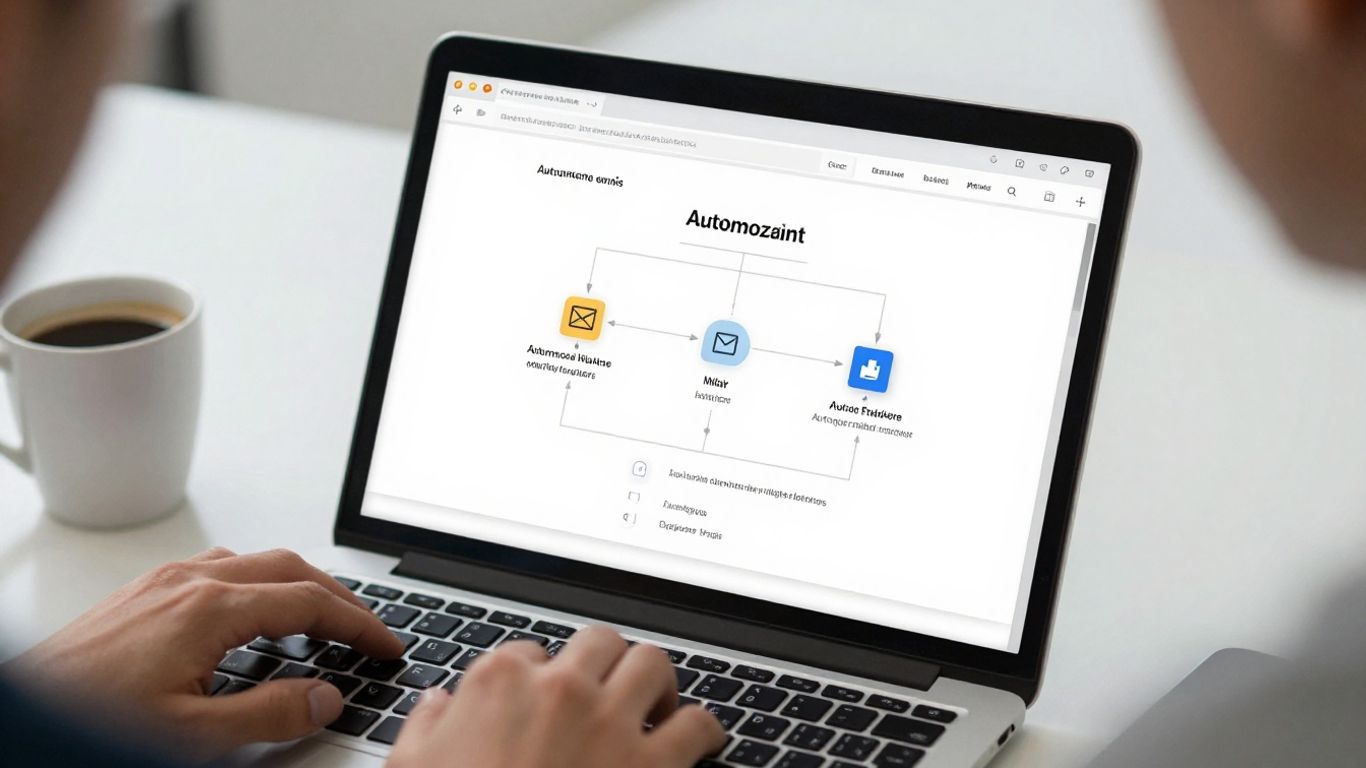
Email nurture is the bread and butter of reliable marketing automation. Done right, it shifts your relationship with leads from cold interactions to warm conversations. Done poorly, it just contributes to the noise that everyone else is trying to filter out.
Crafting triggered responses for lead magnets
When someone downloads a lead magnet, the delivery must be instantaneous. This is the first test of your brand's professionalism. If they have to wait for someone to check an inbox to send a PDF, you have already lost the moment of maximum interest.
Personalising content based on user behaviour
Generic blasts are dead. Your automated sequences should adjust based on what the user actually does. Did they click that specific link in your last update? If so, the next email should dive deeper into that exact topic. This makes your communication feel like an intelligent, personal conversation rather than a bulk broadcast.
Measuring open rates to refine your automation logic
Open rates are a diagnostic tool, not just vanity metrics. If people are not opening your emails, the problem isn't usually the automation—it's the message. Use these numbers to decide if you need to rewrite your subject lines, change your send times, or adjust the entire narrative arc of your nurture sequence.
Automating social media and content distribution
Social media should be a distribution channel, not a full-time job. By treating it as a process to be optimized, you can maintain your presence without sacrificing your sanity. Consistent output is always better than erratic bursts of activity interspersed with long, silent gaps.
Scheduling posts to align with peak engagement windows
Understand your audience's habits. If your data shows people engage at 7 AM, your posts must go out then, regardless of when your team is actually sitting at their desks. Automation handles this timing precisely, ensuring your content lands when it has the highest chance of starting a conversation.
Streamlining repurposing of existing content assets
One good piece of research or a insightful blog post should not live and die once. You should be turning that content into snippets, social posts, and email highlights. Having a system that cycles these assets ensures you are constantly adding value without needing to be an infinite content factory.
Monitoring mentions automatically to manage brand reputation
Automated social monitoring ensures you never miss a conversation about your business. When people mention your brand, you want to know immediately so you can engage or address issues. Letting a tool handle this monitoring allows you to stay proactive instead of constantly reactive.
Measuring the success of your automated processes
If you are not tracking the results, you are not really automating; you are just guessing. Data should tell a clear story about whether your systems are making your life easier or just adding more complexity to your day-to-day work.
Defining key performance indicators for each workflow
Every automated process needs a measurable success factor. For a nurture sequence, it might be conversion rate; for a reporting system, it might be the time saved on administrative updates. Keep your metrics tied to actual business outcomes, like revenue growth or time-to-lead-response.
Detecting bottlenecks in the customer funnel
Automated systems are better than human observers at highlighting where people get stuck. If your data shows a massive drop-off at a specific stage of a sequence, that is where you need to focus your optimization efforts. Use these insights to refine the touchpoints that are underperforming.
Optimising workflows based on historical performance data
Never treat an automation workflow as "set and forget." Your historical data is a goldmine for future improvements. Every month, look at what performed best and what failed, then iterate. A system that improves even slightly every month provides an massive compounding advantage over a competitor who never checks their data.
Conclusion
Automating your marketing is not about stripping the humanity out of your brand; it is about freeing up your best people to focus on the things that actually require their judgment. By implementing sound systems and constantly refining them based on the data you see, you build an operation that scales more efficiently than a manual team ever could. Focus on the basics, keep your technical stack simple, and always prioritize the customer experience over the complexity of your own tools.
Frequently Asked Questions
What are the main components of a standard marketing automation workflow?
A standard workflow includes four core elements: a trigger that starts the process, conditions that filter the specific audience, actions that occur automatically, and precise timing for deliveries.
Is it dangerous to over-automate my marketing efforts?
Yes, over-automation can lead to a sterile, robotic brand experience; the key is to use automation to facilitate human-like conversations and responses rather than replacing your voice entirely.
How long does it usually take to see results from new automation?
Most businesses start seeing operational time savings within weeks, but ROI from improved conversion rates typically becomes clear after a full audit cycle of two to three months of active data gathering.
Should I automate my social media or keep it manual?
Scheduling and monitoring are best automated to ensure consistency, but direct engagement with followers should always remain handled by a real human to ensure brand warmth and authentic replies.
Is marketing automation too expensive for a small business?
It is often more expensive to continue with manual processes that cap your growth, so the real question is how much time you are losing rather than the cost of a software subscription.
How often should I review my automated workflows?
A monthly review is standard practice, allowing you enough time to gather meaningful data while keeping your finger on the pulse of what is working or what needs a quick fix.
Can AI really help me write my marketing content?
AI can certainly help with ideas and structure, but it should never replace your own expertise; use it as a tool to speed up your drafting process rather than a way to generate final content.