Case study · Poolboy
$8k in sales, two weeks after launch.
The much cooler pool float that isn't sticky. Three fabric floats, a store built to sell them, and 128 Meta ads tested to find the one worth scaling.
2
Weeks live
$8k
In sales
128
Meta ads tested
6
Automated email flows
The brand
Fabric, not plastic.
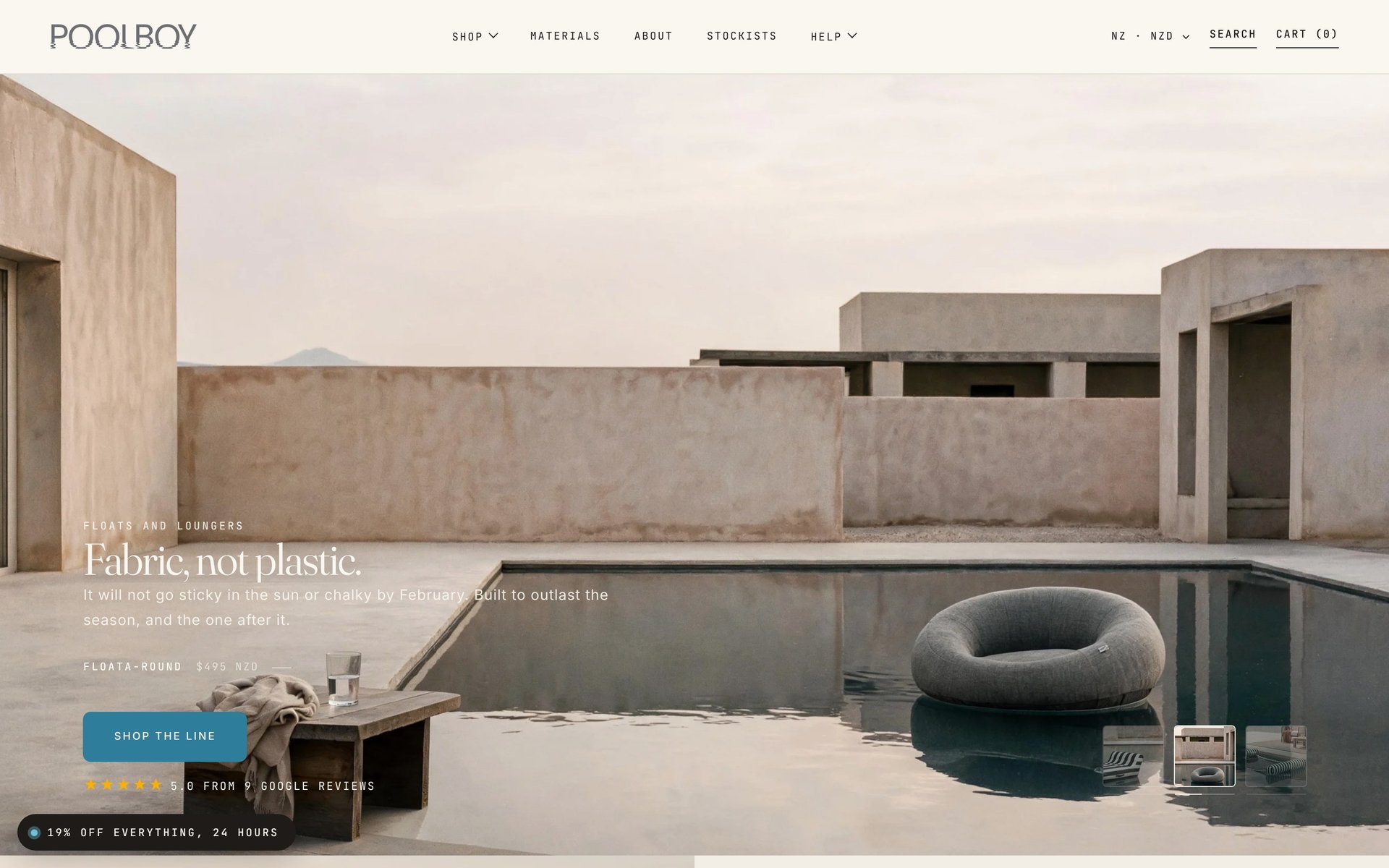
Poolboy makes three pool floats. A lounger for lying flat, a round float you sit in, and a floating hammock. All of them fabric, none of them sticky.
It's an e-commerce brand we're partners in, which makes it the cleanest test we have. Our money, our brand, and the same system we build for clients.
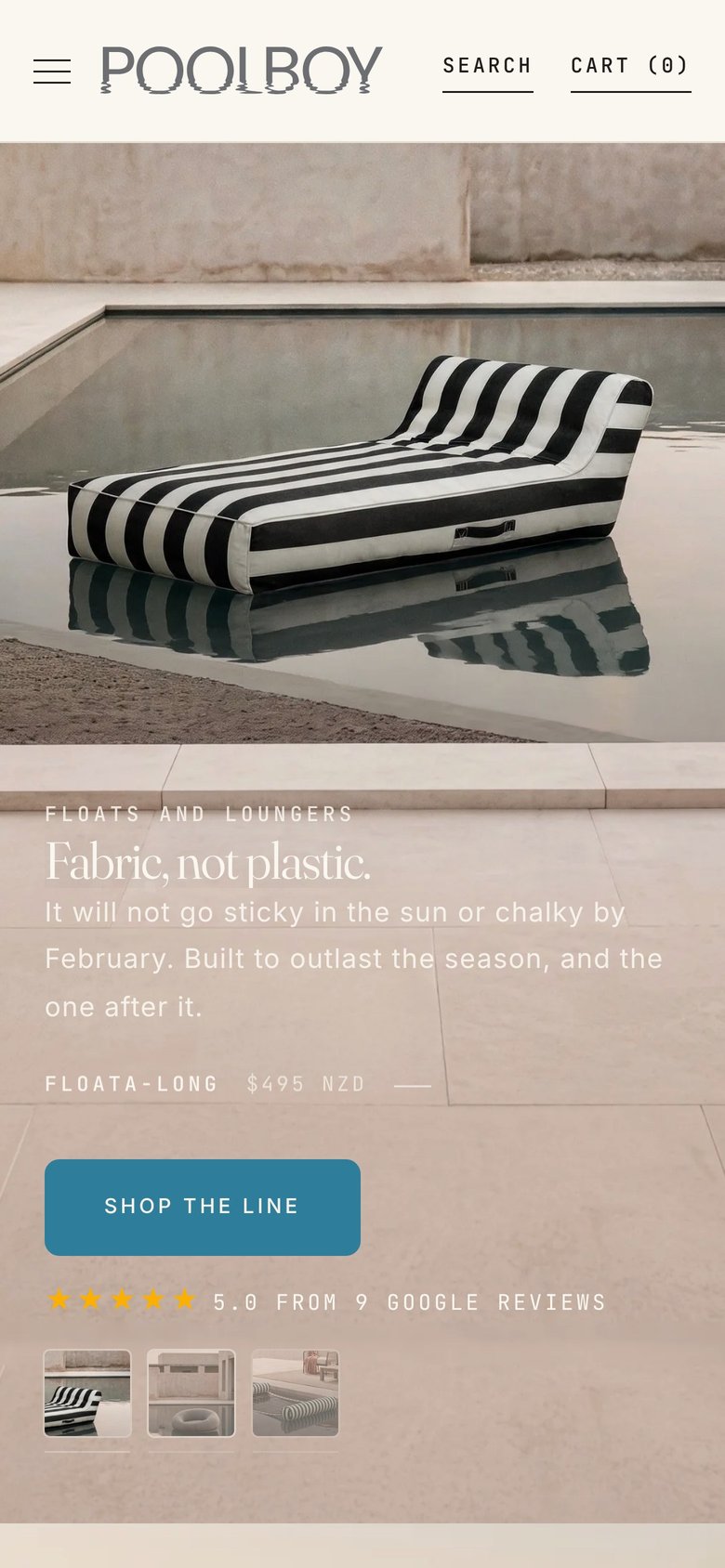
Mobile
The photos
No photoshoot.
Every product shot and every pool scene on the store was made with AI. Every colourway, every angle, the same studio background behind every hero shot, so the range looks like one brand rather than three suppliers.
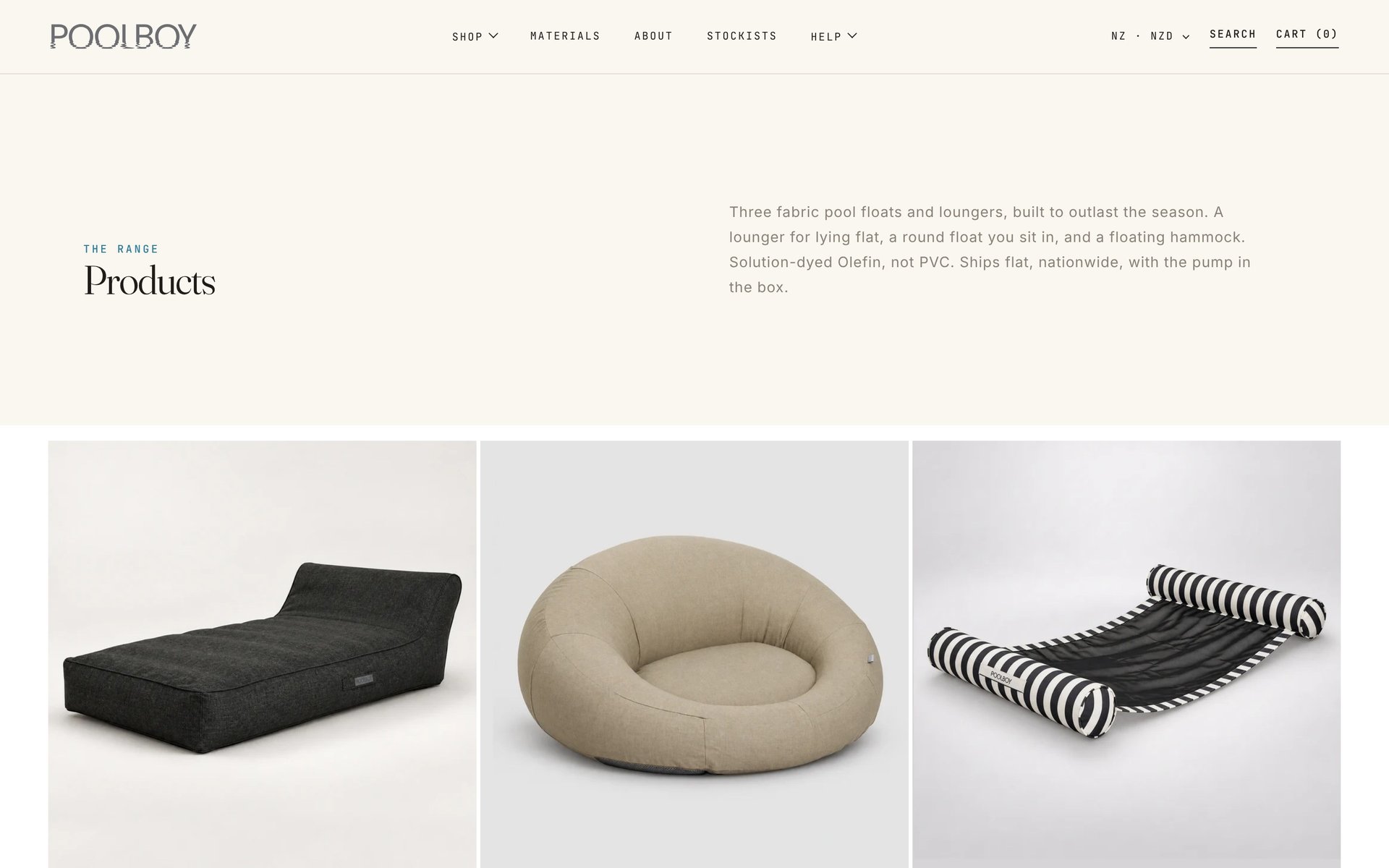
The range, three floats
The store
A product page that answers the questions before they're asked.
Colour picked from swatches, not a dropdown. Bundle tiers backed by real automatic discounts, two floats or the full set added to the cart in one tap. Google reviews under the title, free shipping nationwide, the returns and warranty line where people look for it, and an add to cart bar that follows you on a phone.
Under that, the spec, the dimensions and a Before you buy section that handles the objections a salesperson would.
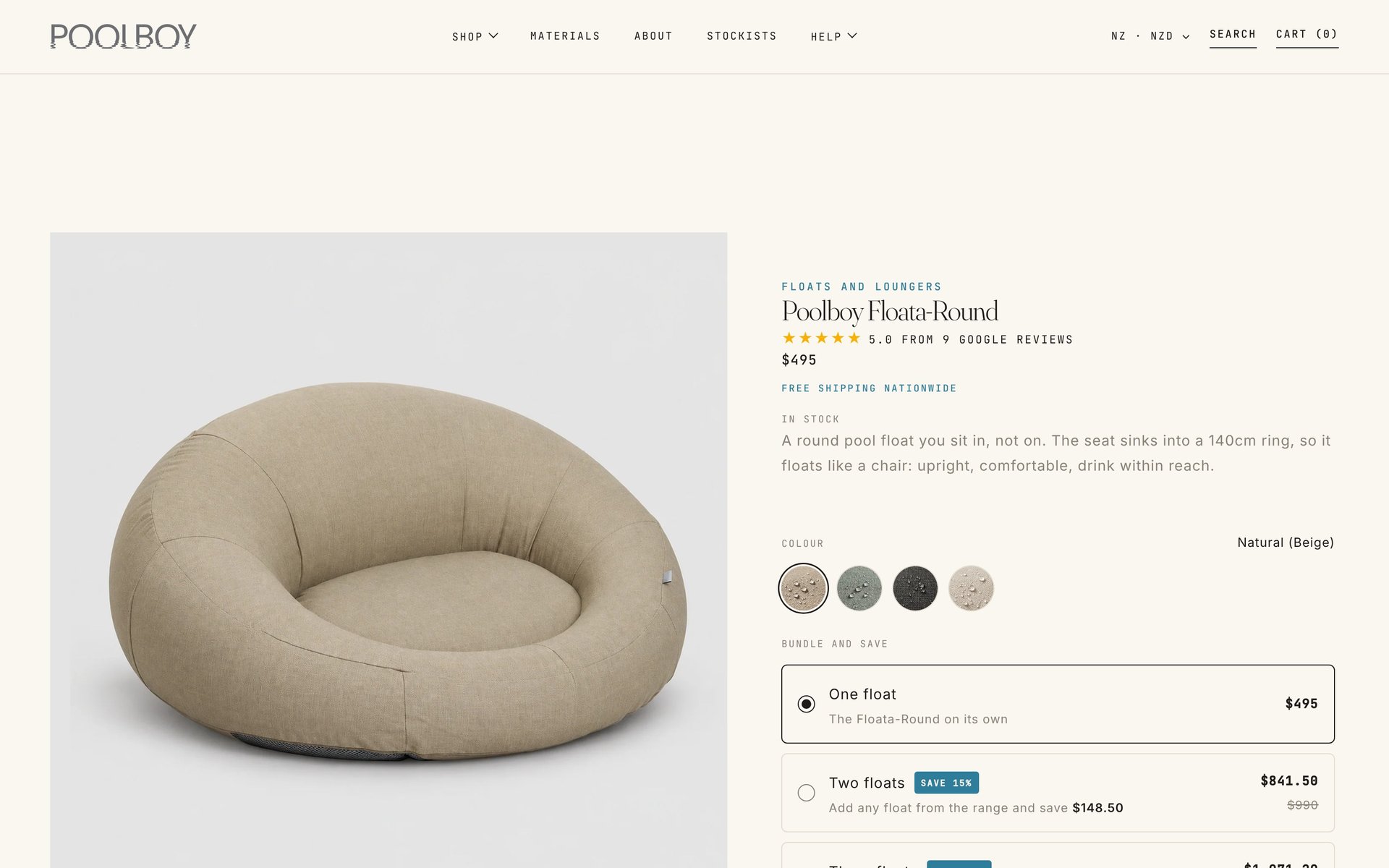
The product page
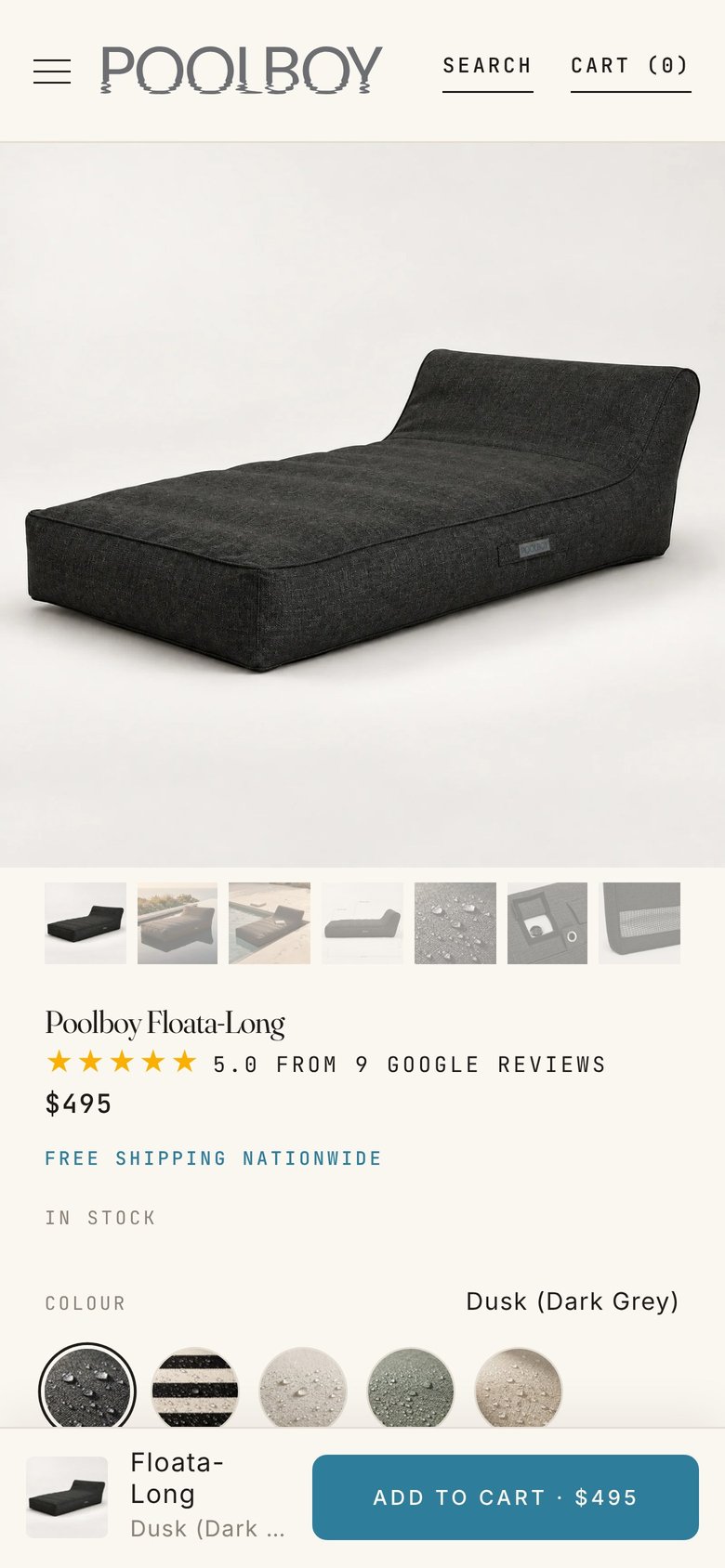
Built for the phone first
The ads
128 ads, tested against each other.
One Meta campaign, one ad set per product, an ad per colourway. 128 different ads went through it.
The point was never to guess the winner. It was to let the numbers pick it. That formula is now found. From here the job is to scale what works and keep testing the next one.
Google Ads and Merchant Center run alongside, so the floats show up when someone is already searching for one.
128
Meta ads tested
3
Ad sets, one per product
6
Email flows
16
Emails written once
The follow-up
Six flows that run while we're doing something else.
The welcome, the saved cart, the checkout reminder and the rest. Sixteen emails, written once, sent every time someone qualifies, without anyone remembering to send them.
The point
The system, pointed at our own money.
AI made the photos. Automation runs the follow-up. The ad testing happens at a volume no small team would do by hand, with the apps doing the repetitive work most people would call agents.
Two weeks in, $8k in sales. And the next brand got the same build in a week.
More work
- Grinding DynamicsA whole business, in seventeen days.17 days
- FundHausFrom nothing to funded in three months.$2.4M introduced
- Peard ExcavationFrom invisible, in sixty days.0 → 175 clicks
- The AdvisoryForty three pages, in fourteen days.43 pages
- Naked FlameA worldwide store, built in a week.1 week to live
- Emma HanoverA course, a community and two countries.$2,000 in 2 weeks
Start something
Tell us what needs to run without you.
Figures at the time of writing, October 2026, two weeks after launch.